
Separation Anxiety Training
Houston TX
Get started with CJ's Dog Training's separation anxiety training in Houston, TX, today! We are so sure that we can fix your dog problems that we actually offer guaranteed results and continued guidance for the lifetime of your dog. We will be by your side to help you with your dog every step of the way whether you have a new puppy or an older dog. Claim your free consultation to get started!
True Separation Anxiety Is a Panic Disorder
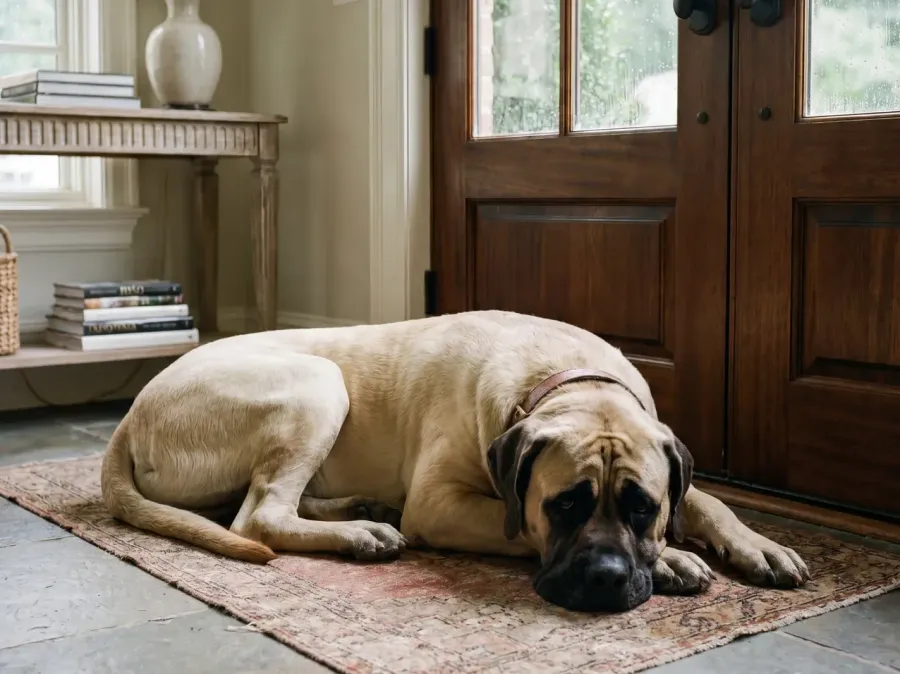
Most owners say their dog has 'separation anxiety' when what they really have is a bored dog who barks for attention or chews shoes when left alone. Real separation anxiety is different, it's a clinical panic response. Dogs with true separation anxiety experience genuine distress the moment their owner leaves: pacing, drooling, escape attempts, destruction of door frames or windows, self-injury from trying to break out of crates, sustained barking and howling for hours, soiling despite being fully house trained. They're not being bad. They're having a panic attack. Treatment looks different than it does for boredom barking, and it requires patience, systematic exposure work, and management protocols during the training period.
Signs Your Dog Has Separation Anxiety
If you see these patterns when you leave the house, and only when you leave, separation anxiety is the likely cause:
- Destructive chewing focused on exit points: doors, door frames, windows, gates
- Excessive vocalization for the entire time you're gone, barking, howling, whining
- House soiling despite being fully house trained
- Self-injury from escape attempts (broken teeth, torn nails, scraped paws)
- Pacing, panting, and drooling immediately when you start your departure routine
- Refusing to eat treats, food, or chews while you're gone
- Velcro behavior, following you room to room when you're home
- Anxiety responses to predeparture cues (keys jingling, putting on shoes, picking up the bag)
- Symptoms appear within minutes of departure and persist or escalate, not fade
What to Do Right Now (Before Training Even Starts)
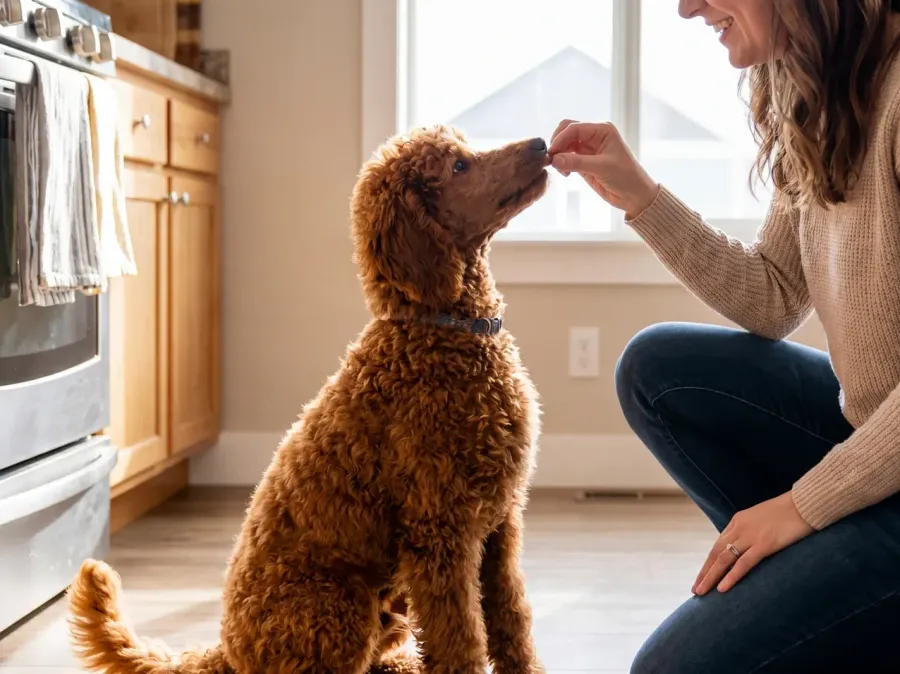
Every panic episode reinforces the anxiety. So the first piece of separation anxiety training is management, making sure your dog isn't being left alone in a state of panic while we work on the underlying issue. That usually means a sitter, doggie daycare, working from home, or a dog walker who covers the gap. It's a lot to ask, but skipping this step undoes the training as fast as we can do it. The good news: this is temporary. Once we get your dog through the protocol, they'll be able to handle alone time. But during the training window, panic prevention matters more than anything.
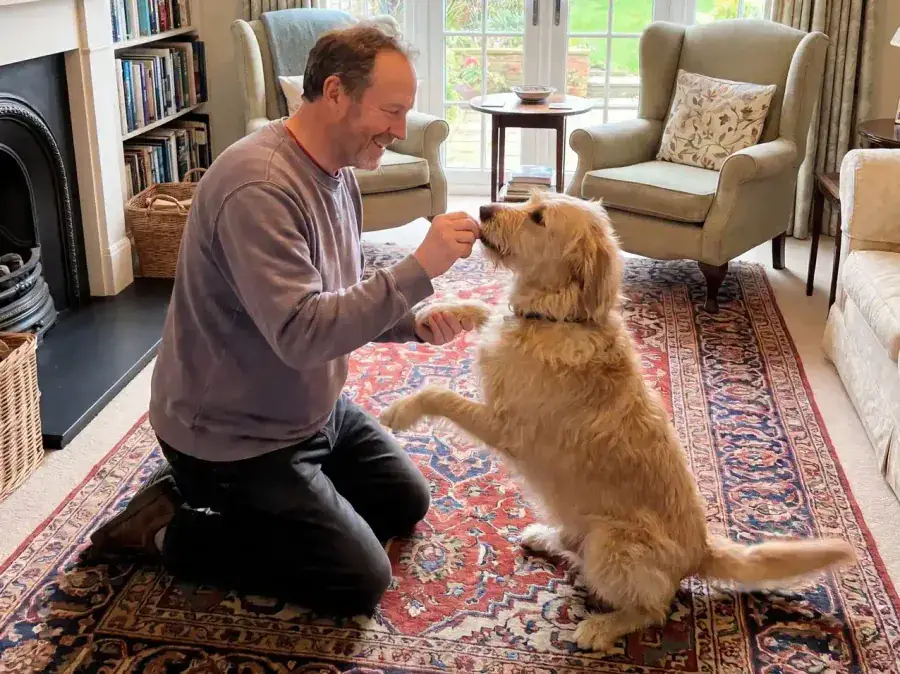
Our Separation Anxiety Training Process
Step one is the assessment, we observe your dog's actual departure response (often via video review of you leaving), identify the threshold where panic kicks in, and rule out boredom or training-issue explanations. Step two is counter-conditioning the predeparture cues so picking up keys and shoes stops predicting your departure. Step three is graduated alone-time protocol: starting with absences your dog can handle without panic (sometimes seconds), pairing them with high-value reinforcement, gradually extending duration as the response stays calm. Step four is generalization to real departures and daily life. Most cases see noticeable improvement in 4 to 8 weeks and full resolution in 3 to 6 months of consistent work.
Why Houston-Area Owners Choose CJ's Dog Training
There are a lot of dog trainers in the greater Houston area. We're the one that handles the cases other trainers won't take, trains the handler as seriously as the dog, and stands behind the work with lifetime support. Here's what sets CJ's apart:
- Real behavior modification expertise, including aggression, reactivity, and severe anxiety cases
- Customized training plans built for your dog's specific behavior, breed, and household
- Local Houston-metro expertise across Brazoria and Galveston counties, we know the parks, the patios, the apartment complexes
- Balanced, science-informed methodology, no shock-collar shortcuts, no dominance theory
- Dog Training. Human Coach., every program coaches the household, because trained dogs need trained humans to stay trained
- Lifetime support included with every program
Our Promise
Your relationship with CJ's Dog Training doesn't end when your formal training program does. We make two promises that reflect how we run this business:
Lifetime Support
Reach out any time with questions
Guaranteed Results
If your case isn't a good fit for our programs
Our Training Philosophy
Most behavior issues, leash reactivity, resource guarding, separation anxiety, recall failures, come down to a communication breakdown between the dog and the human. Our job is to fix that. We use a balanced, relationship-based methodology grounded in clear communication, structured routines, and real-world practice. Three pillars guide every program:
Communication
Dogs read energy, body language, and consistent patterns. We coach handlers to send signals their dog actually understands, instead of repeating verbal cues that mean nothing.
Structure
Predictable routines, clear expectations, and consistent boundaries make dogs calmer and more confident. Structure isn't rigidity, it's the framework that lets your dog relax.
Real-World Practice
Training happens in real Houston neighborhoods, real parks, real homes, where the behavior actually has to work. Sterile training rooms produce dogs that fall apart on a real walk.
Frequently Asked Questions
How long does separation anxiety training take?
Most dogs show noticeable improvement in 4 to 8 weeks of consistent protocol work. Complete resolution, confident, comfortable alone time of normal duration, typically takes 3 to 6 months. Severe cases can take longer.
Will my dog ever be able to stay home alone for a normal workday?
Yes, for the vast majority of separation anxiety cases. The training is gradual, but most dogs reach a baseline of comfortable 6 to 8 hour alone time when the protocol is followed correctly.
What if my dog destroys things or self-injures when alone?
Severe cases need management protocols immediately, a sitter, daycare, or a temporary cohabitation arrangement so the dog isn't left alone in panic during training. Self-injury is a sign of severe distress; talk to your vet about anti-anxiety medication as a short-term bridge while we work the behavior modification protocol.
What should I do right now while I'm waiting to start training?
Do not leave your dog alone for extended periods. Every panic episode reinforces the anxiety. Use a dog walker, doggie daycare, work from home, or have someone stay with the dog during the day until training can begin. We know this is hard, it's also temporary.
Is medication ever part of the plan?
For moderate to severe cases, yes, anti-anxiety medication prescribed by your vet can lower the dog's baseline anxiety enough that the behavior modification protocol can work. Medication isn't a replacement for training, but it can be a critical short-term bridge.
Can a crate help, or does it make separation anxiety worse?
It depends on the dog. Some separation-anxious dogs settle better in a confined safe space. Others panic harder in crates and can self-injure trying to escape. We assess each case carefully, never force a separation-anxious dog into a crate without conditioning first.
Is this isolation distress or true separation anxiety?
Isolation distress means your dog panics when alone but is fine when any human is present. True separation anxiety means your dog panics specifically when YOU (or specific people) are absent. The distinction matters because the training plans are slightly different. We sort it out at the assessment.
Ready to Get Started?
Book your free consultation. We’ll talk through your dog’s behavior, your goals, and the right program to get there.