
Reactive Dog Training
Houston TX
Get started with CJ's Dog Training's reactive dog training in Houston, TX, today! We are so sure that we can fix your dog problems that we actually offer guaranteed results and continued guidance for the lifetime of your dog. We will be by your side to help you with your dog every step of the way whether you have a new puppy or an older dog. Claim your free consultation to get started!
What Reactivity Actually Is
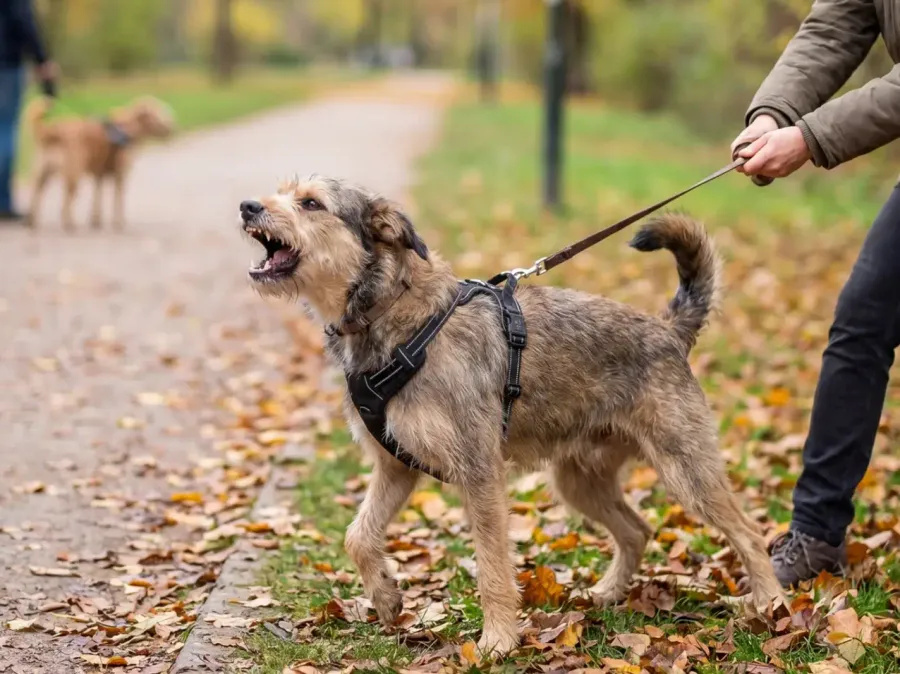
A reactive dog isn't necessarily aggressive, but they look like it from across the street. Most reactivity is rooted in either fear ('that thing scares me, I want it gone') or frustration ('I really want to greet that thing and the leash is stopping me'), and both look the same to onlookers: barking, lunging, hair raised, leash pulling. The internal experience for your dog matters because the training plan looks different depending on which one is driving the behavior. Fear-based reactivity needs distance management and counter-conditioning to change the underlying emotional response. Frustration-based reactivity needs impulse control work and clearer handler signals. Our Houston reactive dog training starts with figuring out which one (or which combination) is driving your specific dog's behavior.
Common Reactivity Triggers
Houston-area reactive dogs typically lose it at one or more of these:
- Other dogs across the street, behind fences, or approaching head-on
- Strangers walking toward you on the sidewalk
- Bikes, joggers, skateboards, scooters
- Cars driving by, especially loud trucks or motorcycles
- Wildlife, squirrels, deer, rabbits, birds
- Children running, screaming, or moving suddenly
- Other animals in the household (cats, smaller dogs)
- Visitors arriving at the front door
- People wearing hats, sunglasses, or unusual clothing
- Other dogs visible from the window (window reactivity)
Our Reactive Dog Training Process
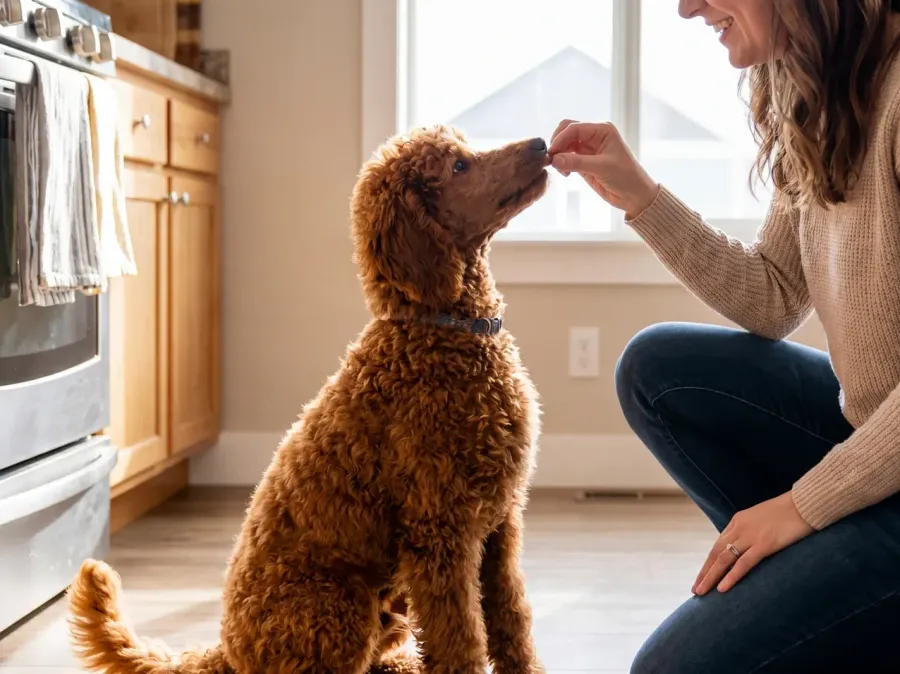
Step one is a behavior assessment to identify the driver (fear, frustration, predatory drive, or a combination) and the specific triggers. Step two is teaching you handler skills, leash management, body positioning, threshold awareness, that prevent reactive episodes from happening while training is in progress (every reactive episode reinforces the pattern, so management matters). Step three is counter-conditioning: structured exposure to triggers at a distance where your dog can stay below threshold, paired with high-value reinforcement, gradually closing the distance as the emotional response shifts. Step four is generalization, practicing in increasingly real-world environments until your dog can walk past triggers calmly in your actual neighborhood. Most reactivity cases see noticeable improvement in 4 to 6 weeks; full reliability around triggers takes several months.
Why Group Classes Often Don't Work for Reactive Dogs
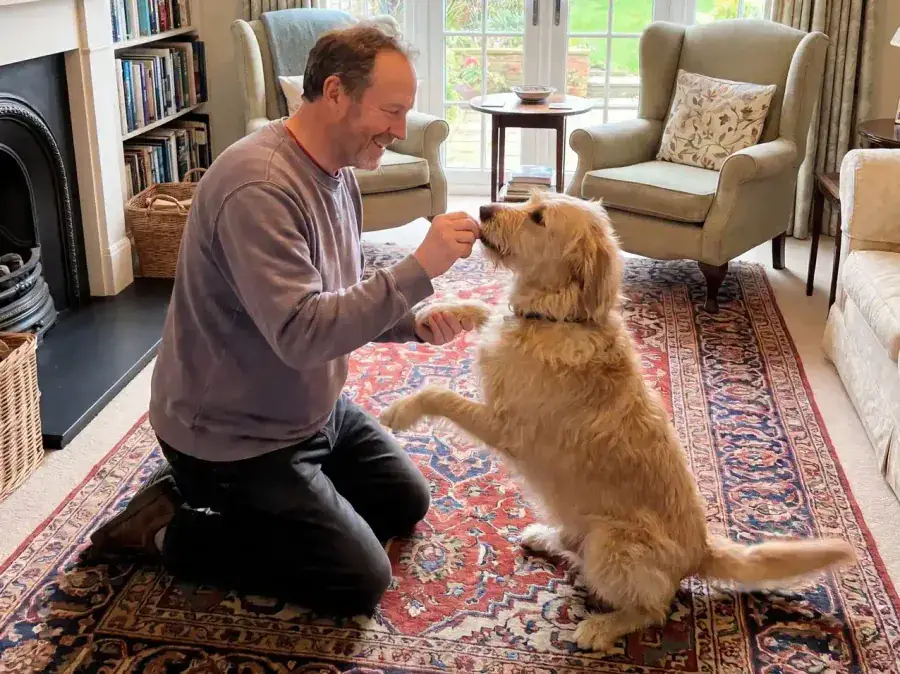
A reactive dog inside a group class with five other dogs at close range is over threshold the entire hour, and every minute over threshold is a minute of practiced reactivity, not training. That's why CJ's runs reactive dogs through private in-home sessions first, then graduates them into our small Reactive Rover group (max 4 dogs, controlled distance work) only when they're ready. Standard group classes are for dogs who can already work calmly around other dogs at moderate distance, which is the goal, not the starting point.
Service Area
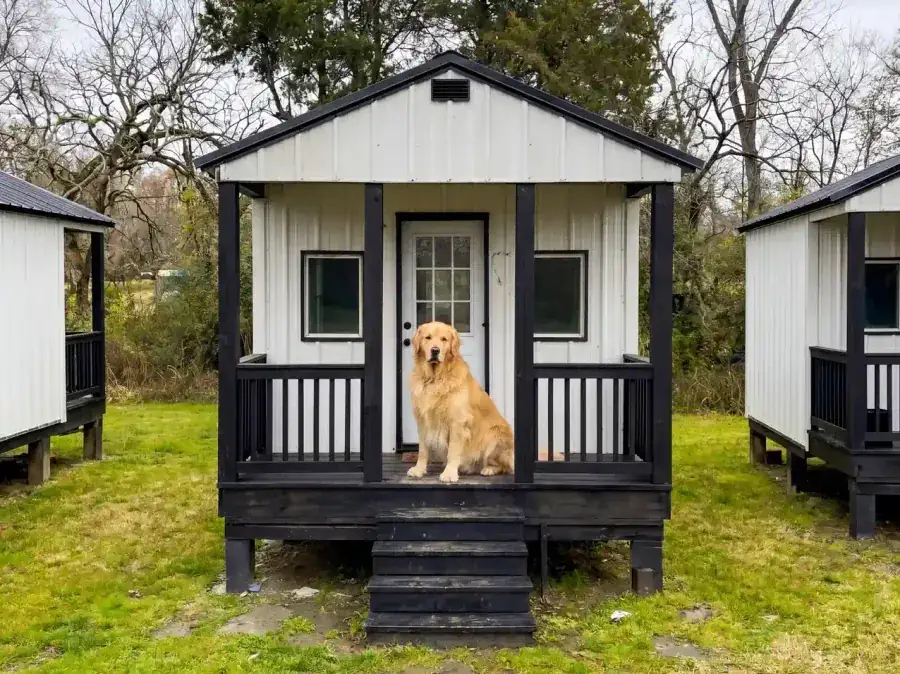
Reactive dog training across the greater Houston area: Houston, Pearland, Alvin, Friendswood, Manvel, Rosharon, Lake Jackson, League City, Dickinson, Texas City, Webster, Pasadena, Galveston, Santa Fe, and surrounding Greater Houston. Most reactive work starts with in-home and neighborhood-walk sessions, then progresses to controlled group exposure once the dog is ready.
Why Houston-Area Owners Choose CJ's Dog Training
There are a lot of dog trainers in the greater Houston area. We're the one that handles the cases other trainers won't take, trains the handler as seriously as the dog, and stands behind the work with lifetime support. Here's what sets CJ's apart:
- Real behavior modification expertise, including aggression, reactivity, and severe anxiety cases
- Customized training plans built for your dog's specific behavior, breed, and household
- Local Houston-metro expertise across Brazoria and Galveston counties, we know the parks, the patios, the apartment complexes
- Balanced, science-informed methodology, no shock-collar shortcuts, no dominance theory
- Dog Training. Human Coach., every program coaches the household, because trained dogs need trained humans to stay trained
- Lifetime support included with every program
Our Promise
Your relationship with CJ's Dog Training doesn't end when your formal training program does. We make two promises that reflect how we run this business:
Lifetime Support
Reach out any time with questions
Guaranteed Results
If your case isn't a good fit for our programs
Our Training Philosophy
Most behavior issues, leash reactivity, resource guarding, separation anxiety, recall failures, come down to a communication breakdown between the dog and the human. Our job is to fix that. We use a balanced, relationship-based methodology grounded in clear communication, structured routines, and real-world practice. Three pillars guide every program:
Communication
Dogs read energy, body language, and consistent patterns. We coach handlers to send signals their dog actually understands, instead of repeating verbal cues that mean nothing.
Structure
Predictable routines, clear expectations, and consistent boundaries make dogs calmer and more confident. Structure isn't rigidity, it's the framework that lets your dog relax.
Real-World Practice
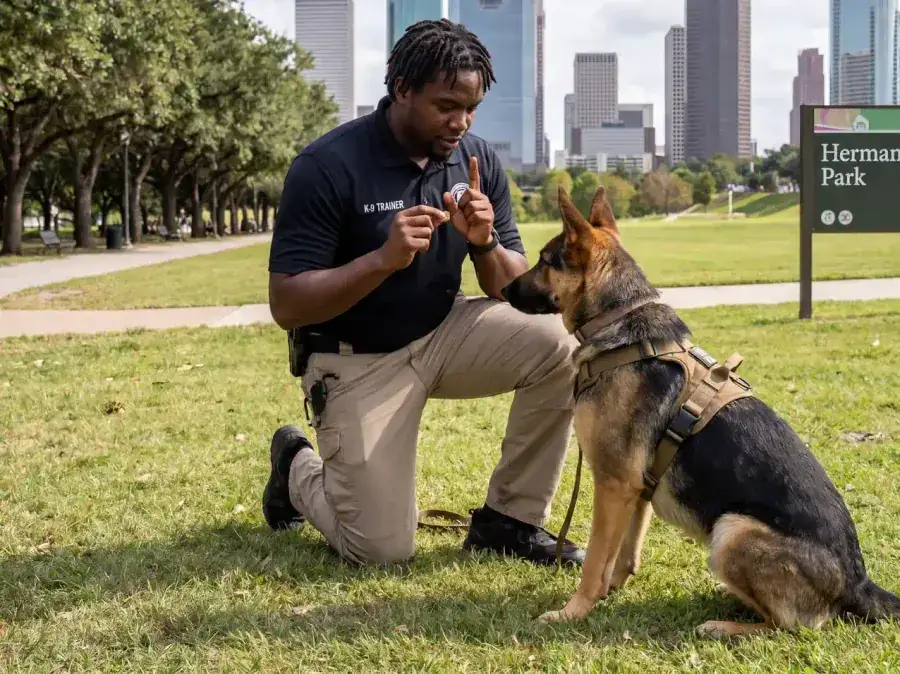
Training happens in real Houston neighborhoods, real parks, real homes, where the behavior actually has to work. Sterile training rooms produce dogs that fall apart on a real walk.
Frequently Asked Questions
How long does reactive dog training take?
Most owners see noticeable improvement within 4 to 6 weeks of consistent counter-conditioning work. Full reliability, being able to walk past triggers calmly in any environment, typically takes 3 to 6 months of structured practice. Severe or long-standing reactivity can take longer.
What's the difference between reactive and aggressive?
Reactive dogs over-respond emotionally to triggers but generally don't intend to harm. Aggressive dogs have intent to do damage. Most reactive dogs never become aggressive, but if reactivity is left unmanaged for years, some can escalate. We assess each case to determine where your dog actually is on the spectrum.
Can you work with my dog during walks in my actual neighborhood?
Yes, that's the whole point of Houston in-home reactive training. We do sessions on your real walking routes, with your real triggers, until your dog can handle them calmly. Training in a sterile facility doesn't transfer to your neighborhood.
Do you offer group classes for reactive dogs?
Yes, Reactive Rover, a small-group class capped at 4 dogs, designed specifically for dogs working through leash reactivity. Reactive Rover is not a starting point, dogs need to complete private sessions first to make sure they can handle the controlled exposure.
What training methods do you use?
Counter-conditioning, desensitization, structured handler skills, and well-timed reinforcement. We do not use harsh corrections on fear-based reactivity, that almost always makes the underlying fear worse over time. We do use clear structured obedience to give your dog alternatives to react.
Will my dog ever be normal around other dogs?
Most reactive dogs can learn to remain calm and neutral around their triggers with proper training. 'Normal' might mean they can walk past other dogs without reacting (most cases) or actually enjoy meeting other dogs (some cases). We're honest about what's realistic for your specific dog.
What about fearful or anxious dogs that aren't really reactive yet?
Better to address it early. A fearful dog that's not yet showing reactivity can become reactive over time as the fear hardens into a defensive pattern. The same counter-conditioning protocols work proactively to build confidence before reactivity develops.
What vaccinations does my dog need to enroll?
For private in-home sessions, current rabies. For Reactive Rover and any group work, current rabies, DHLPP/DA2P, and bordetella, with proof at the first session.
Ready to Get Started?
Book your free consultation. We’ll talk through your dog’s behavior, your goals, and the right program to get there.